Tuesday, February 14, 2006

That's SAINT Valentine to You

National Geo CoverI am sure every other blog today is about Valentine's Day. I thought about posting about the wisdom of a sitting Vice President walking about in a field with a crowd of armed men shooting whatever; but nah! I go with the flow.

Today on our newsstands two rather respectable magazines, The Atlantic and National Geographic, have cover stories about love. "How Do I Love Thee" explores the intersection of academic research and the internet while "True Love" in posits that love is a matter of raging brain chemicals often leading to frenzied state not unlike obsessive-compulsive disorder.

Duh! Any junior high school teacher could have told them that. Those of us with half a memory could give names, dates and places. I personally could have given quite an extended interview.

Will this mean we will see National Geographic and The Atlantic competing for same in the supermarket checkout line space with the National Inquirer or the Globe?

Anyway I would like to leave you with a description of the roots of Saint Valentine's Day, before the Christians tried to tone down the fertility festivals a bit. From Wikipedia:
In Ancient Rome, the day of February 15 was Lupercalia, the festival of Lupercus, the god of fertility, who was represented as half-naked and dressed in goat skins. As part of the purification ritual, the priests of Lupercus would sacrifice goats to the god, and after drinking wine, they would run through the streets of Rome holding pieces of the goat skin above their heads, touching anyone they met. Young women especially would come forth voluntarily for the occasion, in the belief that being so touched would render them fruitful and bring easy childbirth.
I suspect there was more to the celebrations later...

Wednesday, February 08, 2006

Thanks, Wolfgang

FillmoreI missed this last month...
Music Stash Recalls When Rock Was Young

By ETHAN SMITH
Staff Reporter of THE WALL STREET JOURNAL

Two and a half years ago, a Minneapolis entrepreneur named Bill Sagan spent more than $5 million to buy a treasure trove of rock 'n' roll memorabilia: millions of T-shirts, posters, handbills, photographs, concert tickets and other items from the archives of Bill Graham Presents, the legendary San Francisco rock promoter that virtually invented the modern concert business in the mid 1960s.

But what neither Mr. Sagan nor the seller, Clear Channel Communications Inc., realized at the time was that the archives contained an even more valuable bonus: more than 5,000 live audio and video recordings made between 1966 and 1999, featuring artists varying from the Doors to Nirvana. The recordings were made at rock concerts that the late Mr. Graham ran or promoted. They were uncataloged and collecting dust when Mr. Sagan acquired the archive.

Today, the 55-year-old Mr. Sagan controls what may be the most important collection of rock memorabilia and recordings ever assembled in one business. Called Wolfgang's Vault - from Mr. Graham's given name, Wolfgang Grajonca - the company has a staff of 14, projected sales this year of $3 million, and nearly 20 million separate items in its San Francisco warehouse.Butterfield-Handbill

Having set up a business selling vintage rock T-shirts and concert posters on the Web, Mr. Sagan is only now turning his attention to the audio and video assets, where he faces a tremendous challenge. He is in the early stages of complex negotiations with artists, their representatives and record labels over the rights to sell the recordings on discs and as downloads. In the meantime, Mr. Sagan plans to begin "streaming" some of these recordings as Internet radio feeds on his company's Web site, which involves little more than paying royalties to organizations that represent songwriters.

The performances, many of which are professionally recorded and extremely high quality, amount to a sweeping, unheard history of rock during its seminal years and beyond. The archives include performances by artists including Bob Dylan, Bob Marley, Pink Floyd, the Who, Tom Petty, Stevie Wonder, the Mahavishnu Orchestra, Emmylou Harris, Aretha Franklin and Tracy Chapman, all of whom played shows put on by Mr. Graham. The are videotapes of early performances by Crosby Stills Nash & Young and from 1978, the Sex Pistols' last show for nearly 20 years, before their reunion in 1996.The-Who-Handbill

Though some of the recordings have leaked as bootlegs over the years, they contain some revealing moments that may surprise fans. For example, a recording taken from Led Zeppelin's first U.S. tour, in 1969 - when the band was opening for Country Joe & the Fish - finds lead singer Robert Plant displaying little of the rock-god swagger that would eventually become his trademark. Instead, he makes nervous small talk to the audience as guitarist Jimmy Page changes a broken string.

"I don't know if [Mr. Sagan] really knew exactly how much rich material he had," says Bill Thompson, the longtime manager of Jefferson Airplane and Jefferson Starship, which played Bill Graham events frequently during the heyday of the San Francisco rock scene in the late 1960s and early 1970s. "This is a goldmine."

Mr. Graham's company mounted more than 35,000 concerts world-wide between its inception in 1966 and its sale, earlier this decade, to Clear Channel, which bought up a number of regional concert promoters during that era. Mr. Sagan bought the archive from Clear Channel, which had little interest in sifting through the thousands of items that were jammed into the company's warehouse.

Mr. Sagan and his staff spent their first six months in business doing nothing but organizing and cataloging the vast collection, much of which had been thrown haphazardly in cardboard boxes, and some of which had been damaged in a warehouse fire.Cream-Handbill

Today, on WolfgangsVault.com, shoppers can find individual tickets to the Yardbirds' July 25, 1967, show at the Fillmore West for $51 each (a $48 markup over the face value). Prints of photographer Joe Sia's blurred shot of a police officer arresting Jim Morrison on stage in New Haven, Conn., go for $550 to $750. Even the Rat Pack gets the collectible treatment: A black faux-tuxedo T-shirt commemorating a 1988 concert starring Frank Sinatra, Dean Martin and Sammy Davis Jr., costs $82.

But the music and video recordings are the most intriguing and commercially promising. Mr. Graham's company made the recordings partly for posterity's sake, and, in some cases, for a more base motive: adjacent to the Fillmore West was a restaurant owned by Mr. Graham. Rather than lose customers when concerts started next door, Mr. Graham installed a closed-circuit video system that let diners watch the show live - and also captured it on videotape.

When, or even if, the general public will ever hear or see many of these recordings is unclear, however.

The recordings were made legally; Mr. Sagan has a filing cabinet filled with documentation to prove it. But selling them will require various permissions and revenue-sharing deals - not only with the artists themselves, but often, too, with whatever record label they were signed to at the time of the show, or its corporate successor. In the case of dead performers, permission is required from their families or other heirs.

Mr. Sagan's employees have already digitized more than 1,000 audio recordings and sent them to engineers to have the sound quality cleaned up. Now they are in the process of seeking clearances to release the music. Mr. Sagan says he is in active discussions with two major record labels, and believes he is close to a deal for at least some music with one of them, although he declines to name either.Cream-2-Handbill

"Is it easy?" he asks. "No. But in some cases they're excited as hell they might be able to make some money of old bands."

Even with clearances, much of the material in the archives is simply not up to snuff for commercial release. "I don't think a large percentage of it will end up on CD, or in any monetized form," says Gavin Haag, who oversees the company's music-licensing efforts. For instance, he adds, there may never be an appetite for dozens of separate concerts by acts like Eddie Money.

Mr. Thompson, the Jefferson Airplane manager, says he is in "early discussions" with Wolfgang's Vault and Sony BMG Music Entertainment to sell the dozens of live recordings made of his clients at Mr. Graham's various venues. Sony BMG, a joint venture of Sony Corp. and Bertelsmann AG, controls the rights to distribute the band's recordings. Sony BMG and Wolfgang's Vault declined to comment on the continuing licensing negotiations.
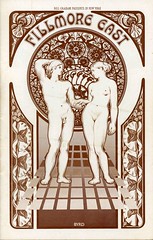
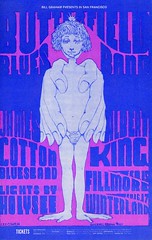
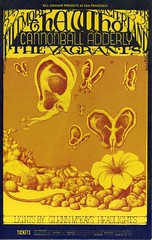
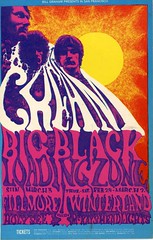
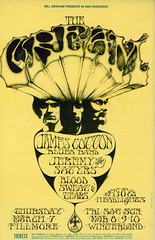
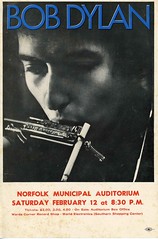
I made quick trip to Wolfgang's Vault. I looked at some of the vintage items for sale and listen to streaming music from the Vault Radio. It brought back quite a few memories. I did not get to New York or San Francisco many times in those days. But when I did I found time to attend several of Wolfgang's productions. They were special enough that I kept souvenirs. Those programs, post cards and hand bills illustrating this post are mine. Mr. Sagan seems to think they are worth almost two grand.Dylan-Handbill

Isn't life interesting?

Oh, and I have one small poster he does not have. It is to the right. It is not for sale.

Where is that key to the safety deposit box?

Friday, February 03, 2006

NRPS

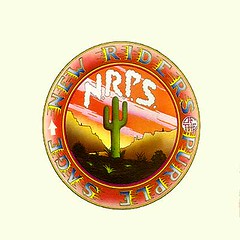
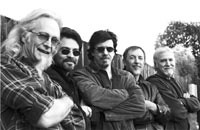
nrpsSaturday night before last, in between trips to Virginia to assist with mother's various visits to the hospital, I spent the evening with the NRPS, the New Riders of the Purple Sage, the premier psychedelic cowboy band. It was a nice break, which I needed.

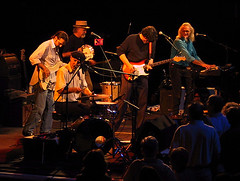
I heard the band this time at my favorite Charlotte venue, the Neighborhood Theatre. Last time it was Saturday afternoon, April 24th, 1971. They opened the music for Joe College Weekend at Duke University, playing on a low stage in the middle of the football field. I had drived down from Virginia were I was in my second year teaching junior high school. NRPS was following by The Grateful Dead, The Paul Butterfield Blues Band, The Beach Boys, and sometime past 11:00 PM, Mountain. I was there for it all, sitting in the grass on the first row. This was about the time of the release their first album, long before Panama Red came to town. Of course last week's version of the New Riders has almost a completely new lineup.

NRPS started as a coffeehouse side project of Jerry Garcia and a buddy, John (Marmaduke) Dawson. Jerry wanted to learn peddle steel and John wrote many of the songs they first played. Jerry and John recruited other musicians as the spirit moved and started to pick up a following. They were soon joined by David Nelson, who once was considered a GD replacement for the very young - and a times struggling - Bob Wier. The trio formed the core of the NRPS and soon they were opening for the Dead.

As Jerry's side project began to cut into his main gig, Buddy Cage, an experienced peddle steel player was brought in. Dave Torbert claimed the bass spot from first Robert Hunter and then Phil Lesh. Spencer Dryden from the Jefferson Airplane took over the drum kit from Mickey Hart. The group's biggest hit, Panama Red, came in 1973. The lineup has been changing ever since.

Nelson and Cage anchor the band today. Nelson has moved to Mexico but he has played off and on as his heath has permitted. Jerry, Spencer, and Dave are, well, someplace else. But that Saturday night their music remained strong.

Monday, January 30, 2006

A Scene From the 'Hood

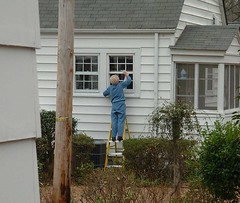
MrsSimmsOnLadderToday has been unusually mild for this time of year. And I have been unusually uninspired on the blogging front; that is until a few minutes ago when I saw my neighbor, who will be 93 this summer, on a ladder washing her kitchen windows. I just had to take a picture. But before I could get my camera she had vanished inside to clean the other side of the glass. So I waited.

I know what you are thinking. I should have rushed over to help. But I already know what she would say. I have been through this before. She will not let someone do anything for her unless she absolutely cannot do it for herself, and she seems to get mildly annoyed if you suggest she should not be doing something, like standing on a ladder. Last time she spent hours trying to change a ceiling light bulb before she called me. A couple of years ago she locked herself out of the house; so she used her ladder to crawl through an open window. I am not making this up.

Soon she was back on the ladder, however the photo from inside the house did not turn out. But by the time I snuck around the corner, she was gone again. She was moving faster than I was.

I don't know what - if anything -I'll be doing when I am 92 and a half. Windows will do.

Finally, always the perfectionist, she was back for a third time. I got her!

I'm glad she does not have a computer. I know she would be annoyed with me showing a picture of her in her housework clothes. I don't like having one of my heroes annoyed with me.

Friday, January 20, 2006

Waste Not

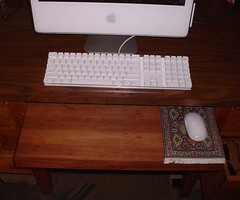
KeyboardTrayI have a "new" desk keyboard tray. It tells a story.

My father was born and raised on a farm. Like most farms in those days, cash money was scarce. Folks made do. If something broke, they fixed it. If it could not be fixed it was set aside to become part of something else. Dad worked his way through engineering school during the Depression. While his career took him away from the farm, the farm never left him.

On our 2 acre farmette I grew up watching my father recreate features of the life he knew so well. We had a large garden and a small orchard. We raised chickens and, for a time, hogs. We had two garages, a workshop and tool sheds. If something broke, he fixed it. If it could not be fixed dad set it aside to wait for a new purpose to present itself. I watched as dad built - among many other things - a 19-foot boat, single channel TV antennas, solid walnut furniture, and a large addition to our house. A trifling child, usually I best helped by staying out of his way. When it was my time to leave for college I am sure both of us had no idea how much I had been absorbing.

After my father died my mother married another electrical engineer with some youthful farm years of his own. He figured out dad's one-of-a-kind projects around the house in short order and kept them going for over twenty years. His attitude towards things broken was about the same as my father's. When my step-father passed away last year I decided it was time to clean over fifty years of accumulated bit and pieces - what most people would call junk - out one of the tool sheds. It was there I saw a wood veneer top from a long discarded dishwasher. One or the other of them had decided to keep it for some future use. It was then I remembered my father's office desk.

My father helped start a small rural telephone cooperative in the 1950's. He served as manager for over two decades. It was a shoestring operation in those days. Dad, determined to make ends meet, bought a black US Government surplus desk and refinished it. It served two decades as his desk and two decades more after he died. Destined for the landfill several years ago it was rescued by the man who replaced dad as manager. He was kind enough to give it to me.

Dad's old desk is still solid. Made from oak and put together to last several lifetimes, it is heavy, very heavy. It was several years before I even tried to move it into my house. But move it finally I did. However, as useful an office desk it is, it was not designed for computers. With the keyboard placed on the desktop, it is an ergonomic mess. At least it was until I saw that dishwasher top. It was just the right size to replace the center drawer.

I refinished the top, bought some rollers at Lowe's that - after a bit of custom work with a hacksaw and drill - provided support, and slid in my new keyboard tray. It works great, is just the right height, and almost looks like it has been there all along.

I would like to think somewhere two old engineers are smiling. One would be amazed.

See dad, I really was paying attention.

Monday, January 09, 2006

Leaves

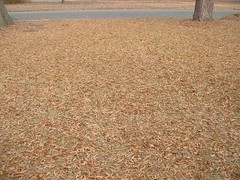
LeavesAfter returning Saturday from yet another trip to Virginia - mother is back in the hospital - I pulled into the driveway and was immediately taken aback by the amount of leaf matter coving my lawn. After much raking, and using the bagger feature of my new lawn mower, it had been leaf-free when I left. Well, almost.

The upside is that the pin oaks are now almost bare; there is little left to fall. BareTreeMaybe next time will be the last major clean-up for the season.

I am headed back tomorrow to Virginia to assist as mother returns home from her second week-long stay on the second floor of Halifax Regional Hospital. As before she will return home more healthy. But although her treatments have been effective and the doctors and staff kind, there is no place like home.

P.S. Among the things I have learned from her hospitalization is that keeping your blood pressure under control is very, very important. Years of even moderately high BP will catch up with you.

Tuesday, January 03, 2006

Thursday, December 29, 2005

Man of the Year

JohnEJonesFederal Judge John E. Jones III for the Middle District of Pennsylvania is my nominee for Man of the Year.

Providing a lone bright spot in an otherwise bleak year, especially for federal employees and elected officials, Judge Jones ruled December 20th in Kitzmiller v. Dover Area School District that "Intelligent Design" (ID) is not science and should not be taught as such in public schools. You can read his entire ruling here. Judge Jones receives my nomination less because of stating the obvious than the clear and straightforward language he used in his ruling. Go John E., Go.

Before the ruling, in a confirmation of sorts that ID is a thinly veiled form of creationism, Pat Robertson warned the citizens of Dover, who had already voted out of office the School Board members responsible for the pro-ID policy, that disaster might strike their community because they "voted God out of your city." But Judge Jones was not intimidated.

What made the ruling all the more galling to the right wingnuts was that Judge Jones, a long-time Republican, was appointed by George W. Bush and approved unanimously by the Republican controlled Senate. One might wonder if, as he prepared his ruling, the judge weighed how it might affect his career. Should we then praise him for his courage? Or just acknowledge an honest man.

Friday, December 23, 2005

Season's Greetings - 2005

As I write this it is dark outside. Winter Solstice was two days ago but I still must remind myself that now the sun will be rising sooner and setting later. It is cold for around here, close to 20 (F). But in a few hours it will be pushing 60. It has been that kind of year - a year of extremes, a year of cycles.

2005 was dominated in this household by the health of others. While we have been well - save that broken little toe I managed - others we care for have not. John Donne hit it hard, straight on. I haven't the energy to chronicle the anxiety, pain, and loss; after just finishing the better part of a week with my mother in the hospital - the same building where my step-father died in May - I am spent. And this is neither the place nor time.

This time of the year - Thanksgiving, Winter Solstice, Christmas - reminds us of the larger picture we are all part of, like it some days or not. But each of us has only a short time in that picture to figure it out, make it ours, pass it on. Oddly, if we draw back the lens and take in that picture we really don't get smaller, we grow with it.

So this season is not a time to dwell on just one part of life's cycles and rhythms; it is a time to try to see it whole. It's a Wonderful Life. Really. And these are the good times, even if they don't seem like it.

Season's Greetings.

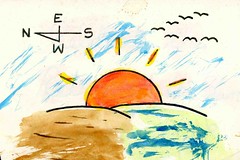
The illustration was scanned from a drawing I made in 1974 and used for Winter Solstice cards. Thus began and ended my watercolorist career.

Wednesday, December 21, 2005

Eugene McCarthy

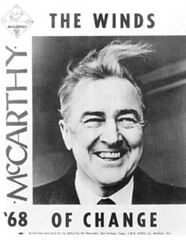
4mccarthThe first person I ever voted for for President of the United States died the 10th of this month, Eugene McCarthy of Minnesota. He was not on the ballot, but that didn't stop me. Of course, write-ins were not allowed then - as now - and my ballot was voided. Even though the close election brought us Richard Nixon instead of the much more preferable (in retrospect) Hubert Humphrey, I would not trade my memory of how good I felt leaving that polling booth for anything. It was a bipartisan act; I wrote in John Lindsay, Republican mayor of New York, for VP. All this was odd behavior for a country boy from Virginia.

1968 was a dramatic year in our nation's history. We were at war in Vietnam, and with ourselves. American flag decals were pointedly on - or not on - vehicles everywhere. Our cities were literally smoldering through riotous "long, hot summers." There were youth riots in Paris and men with longish hair were making more than a fashion statement. I watched on TV that summer evening as people like me were clubbed and gassed outside the Democratic National Convention in Chicago. I felt guilty not being there, although I am sure I would have been totally lost. Jim Crow was dying a slow death in the south, and taking some of us with him.

Before 1968 was over a President would decide not to stand for re-election, only four years after receiving the highest percentage of the popular vote in modern history. Two major political figures, Martin Luther King and Robert Kennedy, would die assassins deaths. And two guitar gods - Clapton and Page, alums of the Yardbirds - would help harden rock, forming Blind Faith and Led Zeppelin. Drugs were suddenly everywhere; the Magical Mystery Tour was just about over.

I was a senior in college majoring in Political Science, plugged in and observing everything with the full intensity of youth and doing what I could to stretch my college career out another year; the draft board knew where I lived. The previous fall I had traveled the world for four months as a student, absorbing what it meant to be more than a Virginian, more than an American. While I was on the Indian Ocean, midway between Mombasa and Bombay (Mumbai), on November 30th, 1967 a little-known Senator from Minnesota declared that he would challenge the President - a member of his own Democratic Party - in the upcoming New Hampshire primary. McCarthy eventually lost but the political dialogue had been changed. It was not whether, but when we would back out of Vietnam.

In many ways Eugene McCarthy was an odd duck for a political figure. The public and his supporters often found him vexing. Historians - and most recently obit writers - have struggled to take the measure of the man.

He was a very private person who nevertheless seemed to enjoy running for president. He did so five times, always knowing he had little-to-no chance. He was a semi-pro baseball player, public school teacher and college professor. As a young man he lived in a monastery for nine months before thinking better of becoming a monk. He was a poet who recently complained that in the judgment of history his short anti-war campaign would always eclipse his verse. He left his wife of 24 years in 1969, but they never divorced. He was a classic liberal with an independent streak that made other liberals very uneasy. Among other things, he wanted to abolish the two-part system and supported Ronald Reagan's "Star Wars" initiative. He had the biting dry wit of a cynic, a frustrated idealist. Yet he once admonished us to "always speak as if a child is listening."

If we only could.

He seemed to enjoy being the outsider, which is exactly where most Americans preferred him to be. I wanted him President. He was 89.

Saturday, December 10, 2005

7 Drinks of Mankind

I have been on the road again, again at my mother's. Visiting with her has become an adventure; what I plan to accomplish seldom gets done, what I get done is almost never what I planned. Now that I am home I have even more reason to smile at the opening lines of a new blog series found at one of my favorites, Locust Street.Six Glasses
As we enter the holiday season, our thoughts turn to drinking.
Inspired by the recent book, A History of the World in Six Glasses by Tom Standage, Locust Street is guiding us through some of our favorite beverages in much the same fashion as the Seven Deadly Sins series.

Mr. Standage ventures that human history, for the most part, can be summed up in the history of six types of beverages: Beer, Wine, Spirits, Coffee, Tea, and Coca-Cola. Chris is now halfway through, having dispensed with the alcohol portion of the list. I'll drink to that and suggest you enjoy the musical appreciations of each beverage at Locust Street along with me.

Friday, December 02, 2005

Dorothy Allison

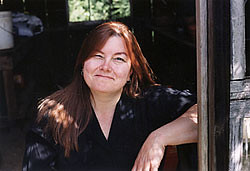
dorothy_allisonOne of the perks of being a faculty spouse is the occasional meeting of campus visitors; last night it was author Dorothy Allison. She spoke about writing to my wife's 2 o'clock class and in the evening offered a public reading from her forthcoming novel. In between a small group of us had dinner with her at a local restaurant. It was a most refreshing - and enriching - experience.

While some authors may be better read than met, Ms. Allison is not one of them. Both through her writing and in sitting across from her eating fried seafood and discussing hushpuppies, she reveals herself as one who is as real as the day is long, and as honest as most of us can generally stand.

Such a combination can make unpleasant company - but not in her case. She is a person who writes as if her life depends on it. It probably does. And she believes with a ferocious intensely what she has to say. But she is also comfortable enough within her own skin to put others at ease, all the while focusing their attention on subjects they otherwise might not want to think about. It is a rare combination.BastardOutOfCarolina

Ms. Allison's world is large, too large to visit here today. It is a world I inhabit only at the fringes. But yesterday I had the opportunity to listen to someone saying well many things that needed to heard, especially by young writers, young people. If you know her work, and a little bit about her, you understand. If not, I suggest you explore the world of Dorothy Allison.

Tuesday, November 29, 2005

Thanksgiving @ the Beach w/Jane

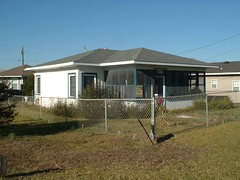
BussStopThanksgiving is our dog Jane's birthday, as close as we can figure. This year we celebrated her third birthday with a trip to the beach, a place she had never been. We rented a wonderful old beach cabin, the Buss Stop. There are not many of its vintage still standing at Surf City, on Topsail Island just north of Wilmington.Buss-Interior

Small by today's standards, it suited us just fine. The aged pine paneling, low ceilings and appropriate beach funky interior - shells, lighthouses and fish images everywhere - were just right.

The owners have made the house pet friendly with a fenced yard. Beach access was across the road. Beach-Lucky

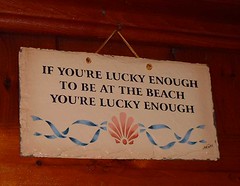
Even when the temperature dropped and the wind blew, it was comfy. The sign hanging in the living room summed it up.

The weather on Thanksgiving day was great; we ate our midday turkey dinner on the porch. It was about 70. TV football and beach reading followed.Surf

Then Friday the wind turned from the north. It might have reached 50, but I doubt it. Still the sun was shining and we took a walk on the pier and watched the fishermen and surfers. Surf City lived up to its name.

Jane@Beach1Jane seemed to enjoy her trip. Her ears stayed up and her nose twitched the entire three days. After a couple of waves surprised her on the beach she showed a healthy respect for the surf. She was well-behaved, especially on the beach where she made new two and four-legged friends. It was fun to enjoy the beach and ocean through her eyes.

It was only a short visit to the coast, but it was great.

Wednesday, November 23, 2005

Hurricane Season

Hurricane season will officially be over in a week. Most will be happy to put the 2005 season behind them and not think about these storms for another six months. Others can't; still others shouldn't.

katrina Both Nova and Frontline last night were devoted to Katrina. Nova covered the science and Frontline the politics - Nova the natural disaster, Frontline the man-made one. While both were predictably a bit too New Orleans centered, they distilled into two hours what happened and why, and were excellent. If you missed these broadcasts or not, the websites devoted to these programs - where the links above will take you - add even more detail.

I have been meaning to remind my readers that Mike Keller and Josh Norman, two Sun Herald reporters that I blogged about after Katrina are still posting. In many, many ways their blog, Eye of the Storm, is more interesting now than right after the storm. Any fool can sound like a great reporter during a catastrophe; they are reminding us the story is still unfolding and that they are paying attention.

If any good can come from what happened to New Orleans and the Gulf Coast both PBS programs provide as good as direction as any to finding it. If we are able to learn something from Katrina, Mike and Josh will notice.

Big ifs, those.

Tuesday, November 15, 2005

Many Happy Returns

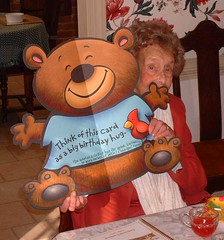
Birthday Party3Saturday was my mother's 87th birthday. My sister and her husband hosted a party that afternoon at their home in Richmond. Surrounded by her children, grandchildren, and in-laws, mother seemed happy. She said that all she wanted were hugs. She got them. Here she is with her best camera smile.

Birthday Party1A special guest was Aunt Jean, the wife of my father's brother Pickett. She is 92.

After the party my brother-in-law, wife, and I took her home and we visited a while with Pickett, who at 95 did not feel quite up to making the party himself. It was great seeing both of them.

Birthday Party2Here is mother with a small card given to her by my daughter.

After the party my daughter left tailing her cousin Adam in her new ride - a tangerine Honda Element - for the paved part of Virginia. She and her fiancee had tickets to see the Dalai Lama in D.C. Sunday afternoon. She was stoked.

I expect she will blog about her weekend soon.

Friday, November 11, 2005

Harrison Bergeron

Welcome to the Monkey HouseIn 1961 Kurt Vonnegut published a very short story that began, "The year was 2081, and everybody was finally equal." The story was Harrison Bergeron and, as the paragraph continued,
They were equal every which way. Nobody was smarter than anybody else. Nobody was better looking than anybody else. Nobody was stronger or quicker than anybody else. All this equality was due to the 211th, 212th, and 213th Amendments to the Constitution, and to the unceasing vigilance of agents of the United States Handicapper General.
The story featured the Bergeron family: George, Hazel, and their fourteen-year-old son, Harrison. As we meet them they learn from the TV news that Harrison has just become a fugitive from justice having "...just escaped from jail, where he had been held on suspicion of plotting to overthrow the government." The TV continued, "He is a genius and an athlete, is under–handicapped, and should be regarded as extremely dangerous."

Vonnegut's story struck a nerve or two in the collective consciousness. Over forty years later the term "Handicapper General" and the character of Harrison Bergeron appear from time to time in political discourse. There was even a TV movie in 1995.

But when I read the story in Welcome to the Monkey House I was struck by the device used to insure that Harrison's father George did not stray too far above the mean, the mental handicap radio in his ear. As Vonnegut described it,
He was required by law to wear it at all times. It was tuned to a government transmitter. Every twenty seconds or so, the transmitter would send out some sharp noise to keep people like George from taking unfair advantage of their brains.
A variety of sounds were used. Vonnegut mentions a buzzer, somebody hitting a milk bottle with a ball peen hammer, a twenty-one-gun salute, a siren, the shriek of a door being torn from its hinges, the sound of an automobile collision. Well, you get the picture.

It finally dawned on me the other day that without the 211th, 212th, and 213th Amendments, or the efforts of a Handicapper General, we now have similar devices in wide circulation. Citizens, especially our young people, are wearing them voluntarily, often listening to sounds not far removed from the government broadcasts of 2081.

ipod2

Tuesday, November 08, 2005

A Special Place in Hell - Part Four

When my wife moved to our small city several years ago high-speed internet access was not available through our local cable provider, Adelphia. So she opted for a BellSouth DSL line. Soon after I joined her Adelphia began offering internet access with rates - bundled with cable TV service - that beat BellSouth. Since we were very satisfied with cable-based service where we previously lived, we went for it. We are now regretting the decision.

From the beginning our internet service would come and go. The TV picture quality, while never great, remained OK. Sometimes the internet outages were only for a few minutes; other times hours would pass. Finally, after a couple of months and a particularly long outage, I called Adelphia to complain.

Even though the local Adelphia office is just down the road, all service is scheduled at a customer service center somewhere at the end of an 800 number. So I explained our situation and we scheduled an appointment some days hence. Shortly the internet returned. By the time the service person appeared the internet had been working fine for several days. He said that they had been working in the neighborhood recently and that may have caused my disruption. He left, checking nothing, and in the weeks that followed the intermittent problem returned.

Eventually I called the service center again and we scheduled another visit. This time the service person did not appear as scheduled. Since I had been spending large chunks of time this summer on the road, I let it drop and did not complain again until the next long - over the entire damn weekend - outage. The following Monday I appeared at the desk at our local Adelphia office and told them we wanted to receive high-speed internet access. When I was told that they would be happy to sign us up I replied that we were already signed up, our service was lousy and we wanted what we were paying for. The shocked lady said they would be happy to schedule a service call. I told her I had done that but the last time no one had shown up. She disappeared in the back and returned saying a service person would be at my house in two days, in the morning between the hours of eight and noon. I thanked her and returned home to find the internet working fine.

The internet connection remained OK and on schedule the service person arrived. He checked the signal strength at the cable modem in the house and said it was good. However, I had noticed some rather funky cabling around and under the house, so I asked him to check out a cable that ran from the "head in" box around the corner of our deck and disappeared under the house through a vent grate. Two cables had been joined by a typical coax connector that was hanging in space, exposed to the elements. I thought that odd. He took apart the connection and said that water had gotten into the cable. He replaced the connectors and said that had probably been the problem all along. I felt a bit silly; I could and should have fixed that problem myself. I thanked him and he left.

The intermittent outages returned. Two weekends ago the outages became longer and more frequent. I took apart and cleaned the suspect connector; still the flashing light on the cable modem. I replaced the connector; it was no better. Monday I called the 800 number again. Trying to be helpful I also mentioned that along with the internet problems that the signal quality on my TV became worse on the higher channels, but that it improved markedly from channels 100 up. With that the internet service rep said the TV problem needed to be checked out first and I needed to be transferred to another department. She further stated that only after the TV service call could a visit from the internet service person be scheduled. Then I was transferred. I told my story again and was told it would be over a week until a TV service visit could be scheduled. I told this service person by that time I could have a DSL and Direct TV installed - and just might. Now with a slight edge to her voice - she must have noticed mine - she told me again they would be happy to schedule a visit, Tuesday next. She said they had no openings until then. I said fine.Coax Cable

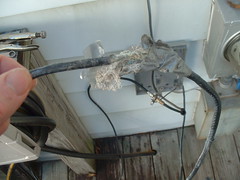
By this time I was pissed off. With no internet and over a week until an initial service call, I had to try something. I decided to replace the cable from the "head in" box entirely. I found a replacement cable after going through my coax collection in the garage. I then opened the "head in" box, disconnected the cable and worked the downstream cable away from the crack between the decking and the house siding. That was when I saw the duct tape. The cable had been damaged, torn through to the core, wrapped with now-weathered silver duct tape, and jammed into the vertical corner of the aluminum siding. I could hardly believe what I was seeing.

My wife then told me that after she had adopted two pound puppies a couple years ago they had chewed the cable causing the TV to go out. She called the Adelphia service people, they came to the house, and she left them on the deck while she went to work. Since the TV worked after she returned she had thought no more about it.

So what I was holding was an Adelphia service repair, carefully placed out of sight in a crack in the siding. I replaced the section of cable, the internet service returned, and I began to look forward to seeing the service person in eight days. I wanted his side of the story.

Last Tuesday morning I received an automated recording from Adelphia reminding us that a service call had been scheduled between the hours of 8 AM and noon on Wednesday. Not what I was told but OK, I could wait another day. Wednesday came and went, no service person. None Thursday; none Friday. None this week. No calls explaining why they were not here. The internet has worked fine since I replace that cable.

So I have decided to post this rant. Of course it does no good. The back story is that Adelphia has been in chapter 11 bankruptcy since 2002. The founders of Adelphia, the Rigas family, seem to have used the company as their private piggy bank, diverting money for their own purposes that could have been used to insure good service for their customers. In case you missed it, the Securities and Exchange Commission described it as, "...one of the most extensive financial frauds ever to take place at a public company." Some family members are facing major jail time for fraud and tax evasion. Most of Adelphia's cable assets have been sold to Time-Warner, which takes over next spring.

It is hard to pin any specific act of local incompetence on corporate malfeasance. But I suspect a connection between that duct tape and the billions looted from Adelphia by the Rigas family. When we read of corporate criminality - WorldCom, Enron, Tyco for examples - the fallout from these acts affect us all, not just stock holders. This criminality will continue until we elect public officials who will pass and enforce laws that finally discourage these breaches of public trust. Unfortunately the bunch calling the shots in Washington now seems more interested in promoting the interests of big business than regulating their behavior. Until that changes expect more duct tape solutions to your problems.

So I would like to reserve a Special Place in Hell for those criminals at Adelphia and at least a glimpse of the fiery furnaces to the guy with the duct tape.

Sunday, November 06, 2005

Roses Are Red, Sometimes

Roses I have never been a roses person, too many unpleasant experiences with thorns as a child I suppose. But my wife likes roses so last spring I planted these for her in our front yard.

They are miniatures, Sweet Melody. I bought them at the NC Farmer's Market in Raleigh. It is November and the photo does not do them justice. Soon they will need a trellis.

I could change my mind about roses.

Friday, November 04, 2005

Illustrations

20051029issuecovUS400

Last July I posted about The Economist, the news magazine. I mentioned,
"Of special note are the illustrations which frequently express an often bizarre British sense of humor that counterbalances the relatively dry, businesslike prose."
This was the cover of the issue I had waiting for me when I returned last Sunday. I really liked it. I am all about sharing...

Thursday, November 03, 2005

Odds & Ends

As has been my modus operandi for the past months, I have been on the road. I returned to base last Sunday night and have been debriefing, decompressing, and decomposing (not writing) ever since. As usual, I went to Virginia with multiple items on the agenda.

Thursday, I submitted my step-father's estate inventory at the county seat. Even though his will and estate are relatively straightforward, administering any estate requires care. So far, so good.

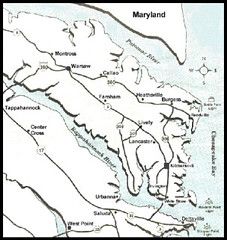
Next was a trip to my mother's safe deposit box to retrieve some stock certificates. Now these assets of hers are safely being held by her brokerage. After that it was on to Richmond and my sister's - with mother riding shotgun.nnmap

I had planned to use last Friday as an opportunity for a day trip to the Northern Neck and another courthouse. I felt like I needed to learn more about some land my mother has an interest in and to determine what building restrictions apply to her waterfront property. To my surprise mother said she wanted to go with me. We had talked about taking a road trip to her family home grounds for several months, but she had resisted every date I suggested. Since my step-father died last spring she has gone through spells when she just wanted to do little more than curl up on her favorite couch in the sun room. Not good. So when she said she wanted to go with me and spend a few days in Richmond with my sister, I was very pleased.

So after spending Thursday night at my sister's we headed up highway 360. The weather was great. After the usual wonderful lunch at Lowery's we hit the courthouse about 1:30. Mother had been very chatty, point out places of interest and the falling price of unleaded regular. I think my favorite moment was when she said, "There was a girl I used to know who lived over there. She married some boy - I forget his name - but he died." Moments like that and I fear I know why my daughter calls me Captain Tangent.

Mother stayed in the car - sleeping mostly - while I provided friday afternoon entertainment at several county offices. I was a bit surprised, but in a little over an hour I had all the information I needed. We then drove to what is left of her family farm - it is a subdivision now - then scouted the other track of land she owns with her brother. We trespassed down a farm road looking for her old family graveyard. Never found it. Mother then decided she wanted to visit a few local communities. This little side trip added a couple of hours to our drive but she enjoyed seeing places again and remarking on what had changed and being pleased at what had not. It was after dark by the time we returned to Richmond, dinner, and a good night's sleep.

Saturday was the event that had prompted my trip north in the first place, the reunion of three classes at the high school where I worked in the mid 70's. Before checking into the hotel mother, my sister, and I visited the new home of my nephew and his bride. They have been renovating a row house in an increasingly trendy section of Richmond. They have done a great job, have clever plans for more work, and it was wonderful to visit with them.

The reunion was great. I saw loads of folks I had not seen in ~25 years. Everyone seemed to have a great time with the socializing starting at three in the afternoon and lasting well past when I went to bed around one. Unfortunately I was was the only faculty member there. I would have liked to have seen some of my old colleagues.

As expected most of us had more weight and less hair. I remember those classes fondly as a very special group of young people. It seems as adults they have retained that character. Several people I expected and wanted to see were not there, but I had several wonderful extended conversations with folks I had not thought of in years. Two of my favorite students who I had not lost touch with were there as expected. Just the time spent with them that evening - and breakfast the next morning - made the trip for me. The rest was a happy bonus.

About noon I returned to my sister's house and mother and I headed south. After getting her situated back home I treked south and home. Even learning that my fantasy football team had again lost - rant coming soon - could not take the luster off a great trip.

Now I plan to take advantage of a spell of dry warm weather to do some outside work around the house - roofing work mostly - and catch up on my blogging and correspondence.

Save the Bay.

Wednesday, October 26, 2005

Middle of the Road

dillo2Several months back I listened to an NPR interview by Terry Gross of Ari Fleischer, our President's first press secretary. Mr. Fleischer was pleasant enough to listen to and after fifteen minutes or so I found myself thinking he probably was a bit too smooth, but maybe not a such bad chap.

But as the interview continued I began to develop a strange disquiet that lasted through the end. I began to notice that Mr. Fleischer kept referring to the Left and the Right, Liberal and Conservative, when discussing political issues. I started to listen for any reference to the Middle. But it was as if the Middle did not exist. I began to wonder what ever happened to our citizens in the Middle. We used to have a Moderates in this country. Really.

There was a time in our recent past when it was OK to be a Moderate, center-of-the-road. Both political parties had Left and Right wings, nuts they were often called. Moderates from both parties listened to the more extreme views of their brethren - the ideologically torqued up - and then supported programs and policies that found common ground. They usually carried the day and we muddled through.

Those who looked for their thrills close to either edge were very often bright, committed and attractive. But they were understood as being quite dangerous if allowed to take center stage. Both Hitler and Stalin and the Weathermen and J. Edgar Hoover had more in common than they would care to admit. They serve as a caution to us all.

But things have changed. With a stridency seen but very occasionally in our short history, Americans are now being pulled - or pushed - to one side or another. Everyone seems to have talking point, not ideas. We are citizens of Red States or Blue States, like it or not. Our fourth estate, the eyes and ears of democracy, are now mainly seen as shills for one side or another - as if every issues just has two sides! Politics is now a blood sport, with the line between political dialogue and entertainment fading fast. Liberals v. Lions at 4:30. Conservatives v. Lions at 5. We now have a whole generation who have seen nothing else. They think this is normal. We may debate as to how we got this way, or whether is it a good or bad thing, but here we are.

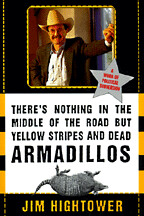
hightower1Jim Hightower, the self-proclaimed America's #1 populist, has scorned those seeking the middle of the road. He wants us to commit to one side of the other, believing of course that most will join him. He reminds us that the most dangerous place to be now is in the middle of the road, the new ragged edge of American politics.

Push come to shove I know which side of the barricade I would join. That part is easy for me. But for the time being I would rather get my thrills searching for that center again. It wasn't so bad.

Sunday, October 23, 2005

Wheeee!

Yesterday the 3 PM temperature at the local airport was 81 degrees (F). This morning at 7 AM it was 43 (F), a 38 degree drop in sixteen hours.

I think autumn just knocked on the door.

Saturday, October 22, 2005

More Railroad Earth

RREpromo Last Saturday evening was the fourth and last of our string of live music week-ends. For the third time we were in Charlotte at the Neighborhood Theatre, this time spending an evening with Railroad Earth. My daughter, her fiancee Michael and her old friend Chuck joined us, first for a wonderful dinner at Boudreaux's and then for the music. The evening was just about perfect. But the best part for me was after the show, in the parking lot.

Railroad Earth filled the main stage of the theatre nicely and opened at about a quarter to nine. Our seats were about four rows back, center. The sound was perfect as was the sightline to the stage. The dancers in front of the stage did not obscure our view. As there was no opening band, RRE played two sets. After the first my wife and I staked out a position at the foot of the stage with the dancers where we spend the remainder of the evening.

The guys came back after the break and just smoked. As it was their eighth show in nine days, I was amazed at their energy level. I was stationed underneath John Skehan, the mandolin player. From this position I was able to hear the music partially through his stage monitor - all the better to marvel at his contribution to the band's sound. I don't think I have ever heard the band any better. I sure hope a copy of the show appears on archive.org.

After the show - three encores - we said our good-byes and headed for the parking lot behind the theatre. As we turned the corner into the lot we saw a small crowd at the back of a van. Moments later we heard music and saw some guys playing away. Curious, we walked over and saw Skehan playing with folks we did not recognize. They were in a tight circle - banjo, guitar, bass, hand-held drum, and John. They were watching each other like hawks, occasionally calling out chord changes.

So here was John, after already playing for three hours, jamming after midnight in a parking lot, just for the love of making music. That, folks, is what it is all about.

After a couple of tunes we headed to our car and drove away, smiling.

On the Earthboard later I found that John was playing with the Lost Ridge Band from Boone. Tim and Andy joined in the parking lot set after we left.

Damn, what a night.

Sunday, October 16, 2005

Harriet Miers, Best Justice Ever?

You may have been surprised over the past few months as the chickens have been coming home to roost around the White House that I have had little to say. With his approval levels dropping below 40%, his associates under multiple investigations, his war in Iraq not going particularly well, his blatant cronyism under the spotlight, his handling of the economy faltering, his international standing about as low as an American president has ever been, and his second term agenda in deep trouble, it has been a long time since G.W. Bush has had much to feel good about. Maybe he should go to the movies; or maybe not. But I have been content to just let history play out the rope with which he is entangling himself with little comment.Harriet_Miers

But I was just blown away by his choice of Harriet Miers as the next Supreme Court justice. I really don't know whether to laugh or cry. With one announcement he has managed to confound his friends and foes alike, and expose at the worst possible time his consistent lack of sound judgment and personal integrity. I almost feel sorry for the guy. Almost.

More than for him I feel for Ms. Miers. Minimally qualified, except through her devotion to a man who became President, it must be very painful to have to endure the hostile scrutiny of practically everyone with her main defenders all working at one address. With friends like the President's "conservative" supporters, she does not need enemies. She may well be a great person, smarter and more hard working than most. But she has fallen in with thieves. It is getting personally ugly, and may get more so.

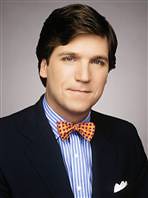
Almost as informative and amusing has been the roiling about of the more reactionary elements of our political establishment, almost as entertaining as watching a dog chew on its own leg. Sometimes the best you can hope for is that these folks get the opportunity to really say what is on their minds, and that someone is listening.Tucker tie.vsmall

The recent "interview" of Robert Bork by our bow-tied Tucker Carlson was a joy to behold. Besides the uneasy image I had reading the transcript of two dogs smelling each other, I found it amazing that Bork was willing to say, in effect, that his main objection to Ms. Miers appointment was that she may carry with her to the court a somewhat open mind. Interpret for yourself:
TUCKER CARLSON, MSNBC HOST: Are you impressed by the president's choice of Harriet Miers?

JUDGE ROBERT BORK, FORMER SUPREME COURT NOMINEE: Not a bit. I think it's a disaster on every level.

CARLSON: Why? Explain the levels on which it's a disaster.

BORK: Well, the first one is, that this is a woman who's undoubtedly as wonderful a person as they say she is, but so far as anyone can tell she has no experience with constitutional law whatever. Now it's a little late to develop a constitutional philosophy or begin to work it out when you're on the court already. So that - I'm afraid she's likely to be influenced by factors, such as personal sympathies and so forth, that she shouldn't be influenced by. I don't expect that she can be, as the president says, a great justice.

But the other level is more worrisome, in a way: it's kind of a slap in the face to the conservatives who've been building up a conservative legal movement for the last 20 years. There's all kinds of people, now, on the federal bench and some in the law schools who have worked out consistent philosophies of sticking with the original principles of the Constitution. And all of those people have been overlooked.Bork
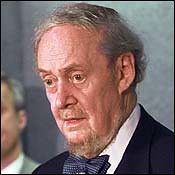
So for Mr. Bork - shown here in a bow-tie of his own and thankfully still a private citizen - it is necessary to have developed a "constitutional philosophy" before considering the facts and context of a case brought before the court. And not just any constitutional philosophy will do. It should be one he agrees with. Lord help us if Harriet Miers ever gets a chance to vote based on something she might learn after taking a seat on the bench.

The interview also had a wonderful little moment provided by Mr. Carlson.
BORK: ... It's odd that Justice Roberts, who is now the chief justice, and who will probably be an excellent choice in many ways, also had no track record that was easy to follow.
CARLSON: Yes.

BORK: Now this woman, who has even less of a track record.

CARLSON: None at all, it seems like. But her defenders' flaks from the White House, some of whom we've had on the show.
BORK: Flaks, eh?

CARLSON: Flaks, you know, professional spinners.
BORK: I know the word, I just was interested in this. Go ahead.

CARLSON: Yeah, that's essentially what they are some decent people, but repeating a line that's been devised by the PR office of the White House - claim that she is a great pick because she brings diversity of experience. Not only is she a woman, and that supposedly - for reasons I don't quite understand - is very important, but beyond that, she has followed a different path than most Supreme Court nominees. She hasn't been a judge, et cetera.
First he calls White House defenders - not supporters - of Miers "flacs." Then he damns them with faint praise by describing them as "decent people." Finally he does not quite understand why diversity of experience or her gender might be important on the Supreme Court.

Listen up Tucker. If you were not white and male - like most of our Supreme Court justices have been and are - you just might find it easier to understand.

These guys can't be as thick as they appear. Or can they?

Wednesday, October 12, 2005

Shakori Hills

shakorifall2005Last weekend was another adventure in music and camping as we attended the Grassroots Festival of Music and Dance, better known by the site name, Shakori Hills Farm. The music and rain were outstanding.
Note to self: When pitching a tent on an incline in the rain, do not extend the plastic ground cover six inches outside the tent on the uphill side.
The festival program describes the event as a "music lovers paradise," listing rootsrock, country, zydeco, latin, african, bluegrass, oldtime, gospel, blues and reggae as the music to be heard. They did not exaggerate; all were there. There was even a swing band in the dance tent Saturday night.

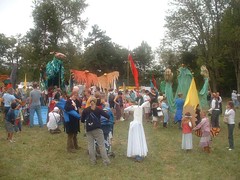
Only in its third year, the festival is smaller and more intimate than LEAF or Floydfest. ChildrensParadeYet it was smoothly organized, at least to this observer. There were no alcohol sales on site which probably contributed to the mellowness. And, like the others, the event is very child friendly, which again contributed to the sense of family and community. The photo above is of the beginning of the children's parade on Sunday.

The food vendors were outstanding. And located in the middle of Chatham County near the North Carolina Triangle, the festival is convenient for daytrippers.

Several of my favorite performers who I had seen recently were there: Donna the Buffalo, Railroad Earth, The Duhks, and Kellin Watson. But the best part of any weekend like this is stumbling across people I had never heard of playing great music. I spent most of the time with a smile on my face, just drifting from stage to stage when something caught my ear. Best-Camper2


Once again Miss Rachel won the outstanding camper award.


Students1But the competition was close as Tobias and Michael, students from Sweden and Taiwan, who are spending a year at my wife's university, adapted smoothly to the many new sights and sounds - as well as a soggy tent Friday night.

In short, it was a great weekend. And the rain? No Problem!

Friday, October 07, 2005

The World Book

WorldBookI can still remember that morning when I was nine. Mr. Spangler, our local World Book Encyclopedia salesman, sat on our front porch and sold my mother this 1955 edition. I remember the smell of the samples, the colors of the different bindings, the salesman's pitch about the positive influence on my education, and mother signing on the dotted line for the installment plan. It was the summer before I was to start the fourth grade, and the beginning of the end of my childhood. Mother told daddy after the fact that evening. I remember him being mildly annoyed about not being consulted. But if he had any real objections they did not keep the boxed volumes from arriving a few weeks later. I was so excited. I remember helping open the boxes, putting them in order, and carefully looking through each one. I had always been a reader. In my school library in the Childhood of Famous Americans series published by Bobbs-Merrill with the orange - and sometimes blue - covers were my favorites. But this was different. This was grown up stuff. It didn't happen all at once - the World Book initially was a bit over my head - but within a couple of years I would often pick up a volume and keep turning pages until something caught my fancy. I would read until satisfied and repeat the process. By this time my father had built an addition to our house which included the bookcase where they still reside and the window seat below where I would read for hours on end. Mother complained that I would rather read than eat. Initially it would have been hard to credit my academic success to the World Book, for I had little. I was an indifferent student by the time I reached high school, a worse one by the time I finished. I was bright enough, my teachers said. But I did not apply myself. True. The classroom seem small to me by then; my attention was easily diverted. I was more interested in sports, cars, and that rock and roll on the AM radio. And I did not know it then, but the 60's were coming to get me. But I had developed on that window seat with those red World Book's a love of reading, the printed word, and learning. Those loves would later form the foundation of my better-late-than-never attempts to educate myself, with - or in spite of - the assistance of institutions of higher learning. I have often wondered what would have happened to me if my mother had not signed on those dotted lines that summer morning.

Wednesday, October 05, 2005

the subdudes

subdudes-bw-pub-smOver the weekend my wife and I were back in Charlotte at the Neighborhood Theatre to hear the subdudes. It was my first time hearing them live after owning all of their albums since they formed in 1987. Maybe it was the Low Country Shrimp and Grits at Boudreaux's Louisiana Kitchen next door before the concert - or the beer - but I would rank their performance last Saturday night in my personal all-time top 10. And I have heard a lot of live music over the years. Damn, they were good.

I know this is beginning to sound like a broken record. (does anyone reading this have any idea what a broken record might sound like?) Like most of my favorites, the subdudes don't sound like anyone else. With a core instrumentation of guitar, accordion and tambourine, years of living and playing in the New Orleans area, and a sitting on the front porch Sunday afternoon sensibility - subdued - their music defies a clear label. All I know is I love it.

It sounds like an old story. A group of veteran musicians gets together for a one-night jam almost on a whim. Something clicks; they like it. They play some more, take a name and build a following. They tour, make CDs and tour some more. But critical praise and a small but loyal fan base barely pays the bills. And the road weary band plays a farewell gig ten years later where they started. The place? The legendary Tipitina's in N.O. The band? Our subdudes.

But wait, there is more. The musicians continue to work. Five years later two ex-subdudes invite another ex-subdude up on stage for a song or two. The crowd goes wild. Discussions are held, bands merge. The 'dudes (three of four) are back - older, wiser, and with more musical ideas to share. Life is good.

That was 2001. Fast forward to August 2005. Hurricane Katrina hits southeastern Louisiana, hard. The homes of the guitar and bass player are severely damaged. They and their families evacuate before the storm and are safe, but now live with family and friends. Several gigs are cancelled or rescheduled but they come to Charlotte October first and just play their asses off. The photo below from the show does not begin to capture the energy.dudesCharlotte

Very few musicians live well. Even the very best, the most dedicated at their craft and to the enjoyment of their audiences, frequently have trouble making ends meet. Sometimes they are their own worst enemy. Other times the guys with the suits rob them blind. In any case it does not take much sometimes to tip them over the financial edge. For many musicians Katrina was sufficient.

Along with the usual messages in the forum section of the subdudes' website recently was a post from the band's management forthrightly acknowledging that the band and its members and families are hurting financially. They are now considering playing at private parties as part of their touring. For musicians of this quality to be willing to play in living rooms says a great deal to me about their dedication and their need. They have gone so far as to establish a relief fund so their fans have a way to help out. And they are far from alone. A quick look at the Tipitina's Foundation website paints the larger picture.reliefregister

So if you have the opportunity and connections, inquire about bringing the subdudes to a venue near you. Contribute what you can in relief of all the musicians who bring so much happiness to the world. Support live music, as I will be doing this weekend.

And check out the subdudes. What the Neighborhood Theatre wrote on its poster might be true, quite possibly the best band, ever.

Sunday, October 02, 2005

Influenza

BarryInfluenza2Last year John M. Barry, author of Rising Tide, published his latest, The Great Influenza - The Epic Story of the Deadliest Plague in History. I just finished it. According to the White House it was one of three books G.W. Bush took with him to read on his hurricane shortened August vacation. I wonder if he did.

While scientists are now arguing in public about just how many people may die in the next pandemic coming to a neighborhood near you, I found the book fascinating for two reasons unrelated to the influenza virus itself and the untold millions (50? 100?) who died.

First was his opening description of the abysmal state of American medical education and practice in the mid and late 1800's and those who, by the time the pandemic occurred, made the best of American medical practice the equal of any in the world.

The second was the governmental and institutional response to the rapid spread of the disease and deaths. Given that the cause was unknown (most thought it was a bacteria) and no cure was available (there still isn't), maybe we should cut the elected officials, medical establishment, print media, government officials some slack. However the repeated poor coordination among governmental agencies, failure to heed professional warnings, and willingness to lie to the public during a time of crisis cost many citizens their lives. Does this sound familiar? There was a war on then too.

Turns out historian John Barry lives in New Orleans (Tulane & Xavier Universities). Seems like instead of having to research trouble, this time trouble came looking for him. You can read more about and by Mr. Barry at the excellent History News Network web site.

That individuals act badly in times of crisis should not surprise us. Fear and ignorance are not pretty, a bad combination. And since mankind is constantly turning over we can't count on individual experience for much. But institutions are different. They were created to express the best of our collective knowledge and wisdom. They were created to pass knowledge across the generations. That the institutions we depend on can so easily fail, repeating the mistakes of the past - in 1918, 1927, as illustrated by Barry, and before our eyes in August 2005 - should be sobering for all of us.